
Are HITWAY E-Bikes Legal in the UK & EU? Speed Limits and Rules Explained
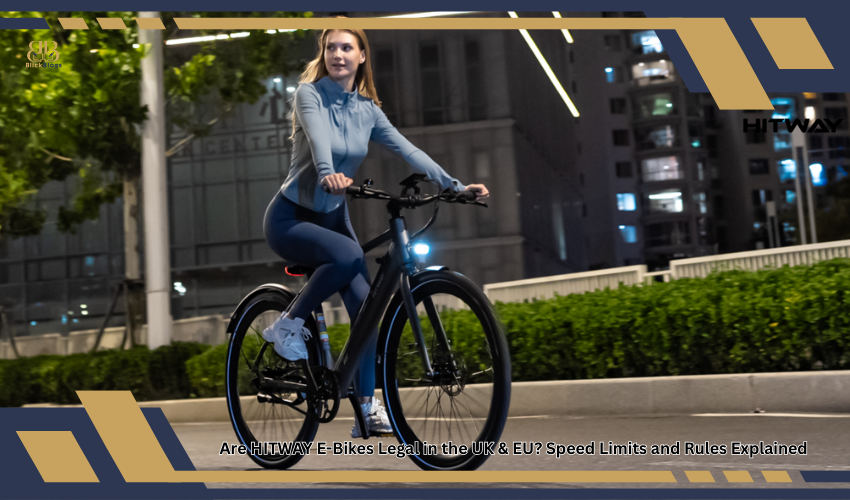
Electric bikes are becoming a popular way to commute, explore the countryside, and enjoy daily travel but legality matters. If you’re considering a HITWAY e-bike in the UK or EU, it’s important to know whether they’re road legal, what speed limits apply, and how regulations affect your ride.
This guide explains the current laws, what makes an e-bike compliant, and how to stay within legal requirements while enjoying your HITWAY electric bike.
TABLE OF CONTENTS
INTRODUCTION
Electric bikes have exploded in popularity across Europe, offering an efficient, eco-friendly way to get around cities, suburbs, and rural routes.
But with different countries and regions having their own rules, it’s important to understand how e-bike regulations affect your ride especially if you want to stay legal and avoid fines.
This guide simplifies the key regulations in the UK and EU, using practical language you can follow whether you’re buying your first e-bike or already cruising the streets.
WHAT “E-BIKE LEGALITY” MEANS
When we talk about e-bike laws, we’re mostly referring to:
✔ Speed limits allowed on public roads
✔ Power limits on motors
✔ Licensing and insurance requirements
✔ Where you can ride your e-bike
These laws exist to keep riders safe and ensure that electric bikes don’t behave like mopeds or small motorcycles unless they are registered and insured as such.
UK E-BIKE LAWS EXPLAINED
In the United Kingdom, electric bikes that meet certain criteria are classed as electrically assisted pedal cycles (EAPCs).
To be legal for road use without a license, tax, or insurance in the UK, an e-bike must:
✔ Have a motor with maximum continuous rated power of 250 W
✔ Provide assistance only when you pedal
✔ Stop providing assistance at 15.5 mph (25 km/h)
If the bike goes faster than this on motor power alone, it may be classed differently (e.g., moped) and require registration, insurance, and a driver’s license.
As long as it meets these rules, the e-bike is treated much like a regular bicycle meaning you can ride it on roads, cycle paths, and many shared-use trails.
EU E-BIKE RULES AND REGULATIONS
Most European Union countries follow a standard set of rules for what’s called a pedelec (pedal-assisted electric bike).
The key points are very similar to the UK:
✔ Maximum motor power: 250 W
✔ Assistance only when pedaling
✔ Maximum assist speed: 25 km/h (15.5 mph)
If a bike exceeds these limits for example with throttle-only propulsion or faster assist it may be classified as a different vehicle type (e.g., S-Ped or speed-pedelec) and require registration and licensing.
HOW HITWAY E-BIKES FIT LEGAL REQUIREMENTS
The good news is that most HITWAY e-bike models are built to meet UK and EU standards by default.
What HITWAY Bikes Typically Offer
✔ 250 W motors (road legal)
✔ Pedal assist that cuts out at ~25 km/h
✔ No independent throttle movement that exceeds assist limits
✔ Well-balanced weight and design for legal classification
Popular models like the BK6S, BK2, BK9S, and BK15 Plus are designed around these criteria.
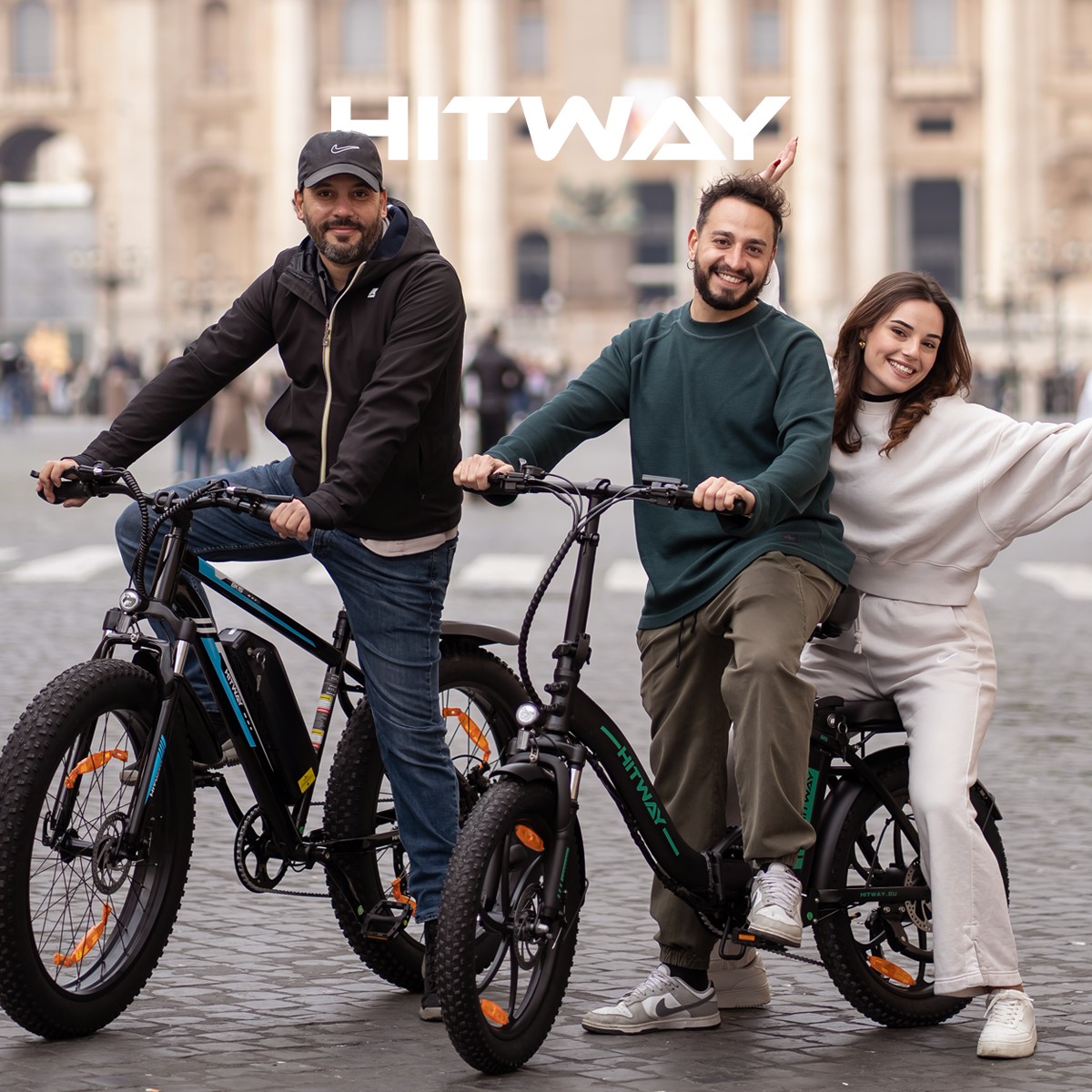
Because they follow the 250 W and 25 km/h rules, riders can use them safely on public roads without special licensing, tax, or insurance as long as the bike has the proper assist settings and performance limits.
SPEED LIMITS: WHAT YOU NEED TO KNOW
Understanding the speed limits is key to staying legal.
1. Assisted Speed Limit (25 km/h / 15.5 mph)
Most UK & EU laws say that electric assistance must stop once your speed reaches 25 km/h. You can still pedal faster than that, but the motor will no longer push.
2. What Happens If Your Bike Exceeds the Limit?
If a bike’s motor continues assisting past the legal speed:
-
It may be reclassified as an S-Ped (speed pedelec)
-
It may require registration, licensing, helmet laws, or insurance
-
It may need number plates depending on local laws
This is why it’s crucial to confirm that the model you buy is designed to meet the assisted limit especially if you plan to ride on public roads.
DO YOU NEED A LICENSE OR INSURANCE?
In the UK and EU, if your e-bike meets the legal criteria (250 W and 25 km/h assisted maximum), then:
✔ No license is required
✔ No vehicle tax is required
✔ No specific e-bike insurance is required (in most cases)
However, some riders choose to carry bicycle insurance that covers third-party liability and theft and in certain countries, additional insurance for electric bikes is recommended.
If your bike is modified or exceeds legal assist limits, then it may fall into a different vehicle category and regular insurance and licensing may be necessary.
WHERE YOU CAN AND CAN’T RIDE YOUR E-BIKE
Because street-legal e-bikes are treated like bicycles:
You CAN ride on:
✔ Public roads
✔ Bike lanes and shared paths
✔ Park paths (where allowed)
✔ Cycle trails and dedicated routes
You MIGHT NOT ride on:
🚫 Motorways and high-speed roads
🚫 Trails restricted to non-motorized bikes
🚫 Private property without permission
Always check local signage, especially in parks and nature areas. Laws can vary slightly by city or country.
COMMON MISTAKES TO AVOID
Here are some frequent legal errors riders make:
Assuming all e-bikes are legal everywhere
Just because a bike is electric doesn’t mean it automatically follows local rules always check specs first.
Modifying motors or controllers
Boosting speed or power can change the classification and invalidate legal status.
Using throttle only
If your e-bike has throttle that propels without pedaling, it may be treated like a moped in some regions.
FINAL THOUGHTS
The short answer is: Yes most HITWAY e-bikes are legal in the UK and EU as long as they meet the accepted standards for motor power and assisted speed.
To stay road legal:
✔ Choose a model with a 250 W motor
✔ Ensure motor assistance stops at 25 km/h (15.5 mph)
✔ Avoid modifications that boost speed or power
When you buy a HITWAY model that follows these rules like the BK6S, BK2, BK9S, or BK15 Plus you’re free to ride on most public roads, bike paths, and shared routes without needing a license or extra documentation.
Understanding local traffic laws ensures your e-bike is not just fun it’s safe and compliant too.
At BlickBlogs, we are dedicated to helping you shop more intelligently, spend more judiciously, and find superior value online. Regardless of whether you are a student, a parent, a fashion enthusiast, or just a sensible shopper, we link you to dependable savings opportunities and trustworthy buying options from your preferred brands across the globe
Subscribe
Sign up below to receive money-saving tips, frugal ideas, family-friendly recipes, and more.