AutoBrush Review 2026: Does the Sonic Pro Really Work?
Quick Verdict
| Category | Verdict |
| Overall Rating | 8.4/10 |
| Best For | People who struggle with conventional brushing routines, families and users prioritizing speed |
| Standout Feature | U-shaped full-mouth brushing in a 30-second cycle |
| Brush Type | Sonic U-shaped electric toothbrush |
| Bristles | Nylon-based brush-head system |
| Main Drawback | Fit and technique are more important than the advertising initially suggests |
| Overall Verdict | A genuinely different toothbrush with compelling clinical support, but not a completely hands-free replacement for good oral-care habits |
AutoBrush Review 2026
Thirty seconds. That's the number behind almost every AutoBrush advertisement and probably the reason you're reading an AutoBrush review in the first place. Most dental advice revolves around brushing for two minutes twice per day. AutoBrush claims its unusual U-shaped design can clean the entire mouth simultaneously, reducing the brushing cycle to just 30 seconds. Understandably, that raises questions.
Does AutoBrush actually work? Is a U-shaped toothbrush capable of reaching the gumline and backs of the teeth? Is the Sonic Pro better than a conventional electric toothbrush? And why does AutoBrush cost considerably more than the cheap U-shaped brushes scattered across online marketplaces?
Those are reasonable concerns because U-shaped toothbrushes have a complicated reputation. AutoBrush's answer is that its product shouldn't be lumped together with inexpensive silicone-bristle mouthpieces. The company uses thousands of nylon bristles, has conducted clinical testing and has earned the ADA Seal of Acceptance for its electric brushes and brush heads. That's enough to make the Sonic Pro genuinely interesting. It's particularly intriguing for adults and children who find traditional brushing tedious, difficult or time-consuming. This AutoBrush Sonic Pro review examines the design, cleaning process, real-world usability, kids versions, pricing, customer feedback and how AutoBrush vs Sonicare and AutoBrush vs Oral-B actually compare.
Check Today's Price
What Is AutoBrush?
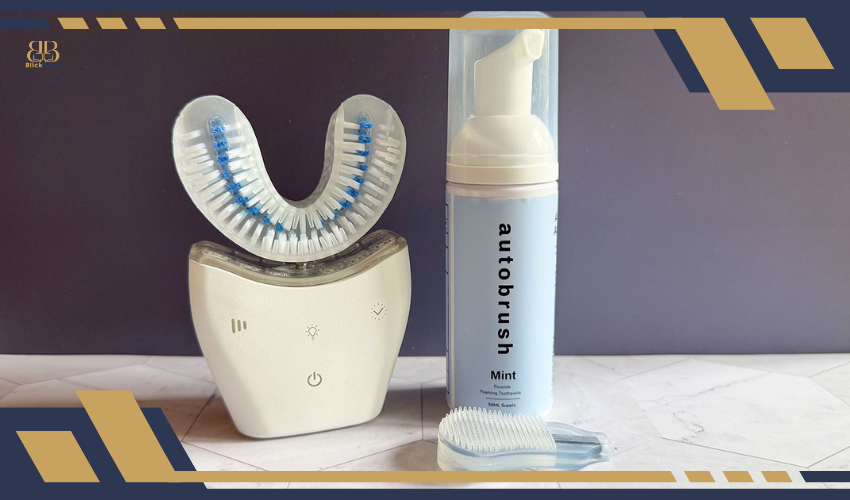
AutoBrush is an oral-care company focused primarily on U-shaped sonic toothbrushes for adults and children. The company says it has spent more than seven years developing and refining its system across multiple generations. Unlike a traditional electric toothbrush, which cleans a relatively small group of teeth at a time, AutoBrush surrounds the upper and lower dental arches with a U-shaped brush head. Thousands of bristles vibrate around multiple tooth surfaces simultaneously. The concept is simple.
If a conventional toothbrush requires you to move systematically around four quadrants, why not brush those quadrants at the same time?
That's how AutoBrush reduces its standard cycle to 30 seconds. The current range includes adult Sonic Pro models as well as Sonic Pro Kids, Tweens and Teens options. Its target audience is broader than simply people looking for a novelty toothbrush. AutoBrush specifically positions the system for busy families and people who have difficulty maintaining conventional brushing routines, including some users with mobility or sensory challenges.
What Makes AutoBrush Different From Cheap U-Shaped Toothbrushes?
This is probably the most important section of our AutoBrush review. Search online for a U-shaped electric toothbrush and you'll find inexpensive alternatives. Some look remarkably similar. That doesn't mean they clean the same way. A 2020 peer-reviewed study examining a silicone-bristle U-shaped automatic toothbrush found that the tested device was ineffective at removing dental plaque. That research is frequently used online as evidence that all U-shaped toothbrushes don't work. But the device studied wasn't AutoBrush. AutoBrush's brush-head design relies heavily on nylon bristles rather than the simple silicone structures found on many inexpensive alternatives. The company also has product-specific clinical data. That doesn't automatically prove AutoBrush will outperform every conventional electric toothbrush for every user, but it means dismissing it based solely on studies of unrelated U-shaped products isn't particularly useful.
AutoBrush Sonic Pro Review: Key Features
U-Shaped Full-Mouth Brush Head
The defining feature is obviously the mouthpiece. Instead of manually moving a small round or oval brush head tooth by tooth, AutoBrush surrounds both dental arches. The concept allows multiple surfaces to receive brushing action simultaneously. That is what makes a 30-second cycle possible. However, AutoBrush isn't completely hands-free. The company's own instructions tell users to move the brush gently side to side or in figure-eight motions while brushing. This helps the bristles reach the back teeth and gumline. Anyone buying AutoBrush because they expect to insert it, stand completely still for 30 seconds and receive the best possible clean has misunderstood how the product is intended to work.
Dense Nylon Bristles
Bristle design is one of AutoBrush's strongest differentiators. The Sonic Pro is marketed with tens of thousands of bristles surrounding the teeth, and current product information describes a combination of nylon and silicone elements in its GumDefend brush system. This matters because nylon bristles behave more like the material used in conventional toothbrushes than the soft silicone nubs found on many U-shaped knockoffs. The bristles are designed to contact the front, back and biting surfaces of the teeth. Correct sizing is critical, though. If the mouthpiece doesn't match your dental arch well, some areas may receive better contact than others.
30-Second Cleaning
This is AutoBrush's headline feature. The manufacturer explains the shorter cycle by pointing out that conventional brushing divides the mouth into quadrants. AutoBrush instead addresses those areas simultaneously. Current company materials say its clinical testing found meaningful plaque reduction using 30-second, twice-daily brushing. The convenience advantage is obvious. Two minutes isn't objectively a long time. But for someone who consistently avoids brushing because those two minutes feel tedious or difficult, reducing the friction around the habit can be meaningful. A toothbrush that gets used consistently has a practical advantage over one sitting untouched beside the sink.
Multiple Settings
AutoBrush isn't simply an on/off device. The Sonic Pro allows users to adjust brushing mode, light mode and timer settings. This gives it more flexibility than the basic U-shaped concept might suggest. The usefulness of each feature depends on the individual. For many buyers, the adjustable timer and vibration experience will matter more than light-based features.
IPX7 Water Resistance
AutoBrush says the Sonic Pro is IPX7 waterproof. That means routine rinsing and shower use are supported, although the manufacturer advises against leaving the device submerged for extended periods. This is particularly convenient for users who prefer to combine brushing with their shower routine.
Does AutoBrush Work?
The short answer is yes, there is credible evidence that AutoBrush can remove plaque but technique and fit matter. AutoBrush publishes results from multiple clinical trials. In one study highlighted by the company, AutoBrush users achieved approximately 50.6% whole-mouth plaque reduction compared with 1.9% for the manual-brush control used in that study. The company also reports particularly strong results around the gumline. Another trial reported a 44.8% reduction in gingivitis symptoms after 30 days. AutoBrush summarizes newer testing by saying the product can clean up to 5.1 times better than manual brushing under the study conditions. Those are impressive figures. They should nevertheless be interpreted correctly. Clinical-study results don't guarantee that every person will achieve identical outcomes at home.
- Dental anatomy differs.
- Technique differs.
- Brush-head fit differs.
And real-world users may not follow instructions as carefully as participants in controlled studies. The sensible conclusion isn't that AutoBrush magically makes brushing foolproof. It's that the current AutoBrush system has substantially stronger evidence behind it than generic silicone U-shaped toothbrushes.
The ADA Seal: Why It Matters
One of AutoBrush's strongest credibility signals is the ADA Seal of Acceptance. It's important to use the correct language here. The product is ADA Accepted, not "ADA approved." The American Dental Association's Seal program evaluates products against requirements for safety and efficacy before granting acceptance. AutoBrush states that its electric brushes and brush heads have earned the Seal. For a product category frequently associated with questionable online gadgets, that distinction gives AutoBrush considerably more credibility. It still doesn't mean every dentist will prefer it to Sonicare or Oral-B. Nor does it mean it replaces flossing, professional cleanings or individualized dental advice. But it moves AutoBrush out of the "random viral gadget" category.
First Impressions: Design, Setup & Learning Curve
AutoBrush looks unusual because it is unusual. The Sonic Pro handle connects to a large U-shaped brush head rather than a conventional narrow toothbrush neck. Your first reaction may be that the mouthpiece looks enormous. For some people, it feels that way too. This is where sizing becomes extremely important. AutoBrush offers different brush-head sizes and a Perfect Fit Promise because one dental arch obviously cannot represent every adult or child. The initial setup is straightforward. Apply toothpaste to the brush head, insert it correctly, choose your settings and start the cycle. But there's a short learning curve. You need to understand how firmly to bite, how the brush should sit around the teeth and how much side-to-side or figure-eight movement is necessary. Once that technique becomes familiar, the process becomes much faster.
AutoBrush Performance: Real-World Experience
Speed
Speed is unquestionably the biggest practical advantage. Thirty seconds feels dramatically shorter than two minutes. That matters less to someone who already brushes perfectly twice a day and more to someone whose problem is actually starting the task. This is why some of the most enthusiastic independent feedback comes from people who previously struggled with brushing consistency. The device can reduce the number of steps involved.
Cleaning Sensation
AutoBrush produces a different sensation from Sonicare or Oral-B. Instead of concentrating vibrations on a few teeth, the mouthpiece contacts much more of your mouth simultaneously. Some people enjoy that. Others find it overwhelming. Independent feedback includes both extremes, ranging from users who say their teeth feel exceptionally clean to people who find the mouthpiece and vibration uncomfortable. This is a product where personal tolerance matters more than usual.
Back Teeth and Gumline
These areas are often the biggest concern with U-shaped brushes. AutoBrush's instructions explicitly tell users to move the brush while the cycle runs to improve contact with the back teeth and gumline. Its published clinical data reports strong plaque reduction around the gumline. However, individual fit remains important. Some independent users say they still need to pay extra attention to certain areas, particularly back molars. That's another reason the correct brush-head size is essential.
Does AutoBrush Replace Flossing?
No. AutoBrush is a toothbrush. It doesn't eliminate the need for interdental cleaning. Food and plaque can remain between teeth where toothbrush bristles cannot fully reach. Whatever toothbrush you choose, continue following your dentist's advice regarding flossing, interdental brushes and professional cleaning.
AutoBrush for Kids Review
AutoBrush may actually make more sense for certain children than it does for adults. Parents know that getting a child to brush properly for two full minutes can be challenging. A shorter cycle changes the equation. The current range includes versions targeted at kids, tweens and teens, with age-appropriate brush-head sizing and more playful designs. The Sonic Pro Kids Exclusive is currently advertised around $89 before additional offer changes, while multi-brush family packages can provide a lower effective cost per unit. AutoBrush's own site contains numerous parent testimonials praising the way the system makes children more willing to brush. Independent discussions also contain positive experiences from parents and users who struggle with conventional brushing routines.
However, there are two important qualifications. First, children still need to learn the correct motion. Second, parents should supervise brushing according to the child's age, ability and dental needs. AutoBrush shouldn't become an excuse to stop checking whether a young child is actually cleaning effectively.
AutoBrush Pricing & Value Analysis
AutoBrush is not a budget toothbrush. At the time of this review, the official site lists the Sonic Pro Bundle at around $79, discounted from a stated $121. The Sonic Pro Kids Exclusive is around $89, while a two-person Sonic Pro Family/Partners Pack is currently around $132. A replacement brush head is currently listed around $25. AutoBrush recommends replacing the head approximately every two months. That recurring expense needs to be included when considering long-term value. The company currently advertises a 30-day money-back guarantee and free shipping on qualifying orders. It also advertises a lifetime warranty while customers remain subscribed to eligible replenishment plans.
Is AutoBrush Expensive?
Compared with a manual toothbrush, absolutely. Compared with premium electric toothbrushes, the difference is less dramatic. For example, Oral-B's current iO Series 2 has a manufacturer price around $64.99. Premium Sonicare models can also climb significantly higher depending on features and bundles. AutoBrush therefore occupies an interesting middle ground. You're paying more for a specialized brush-head system and the convenience of simultaneous cleaning rather than simply buying a more powerful conventional toothbrush.
AutoBrush Discount Code
AutoBrush frequently runs direct promotions and bundle discounts. An AutoBrush discount code may also be available depending on the promotion, but coupon codes change too frequently to publish an unverified one here. Check the final checkout price carefully. That's especially important because third-party customer feedback includes complaints about buyers misunderstanding recurring subscription selections. Before completing an order, verify whether you're choosing a one-time purchase or an AutoShip/replenishment option.
Explore BRAND Collections
AutoBrush Pros & Cons
| Pros | Cons |
| 30-second whole-mouth cycle | Higher initial price |
| ADA Seal of Acceptance | $25 replacement heads add ongoing cost |
| Nylon-based bristle system | Brush-head fit can be tricky |
| Product-specific clinical research | Requires technique and movement |
| Adult and kids versions | Not truly hands-free |
| Multiple head sizes | Mouthpiece can feel bulky |
| IPX7 waterproof | Some users dislike strong whole-mouth vibration |
| Useful for quick routines | Still requires flossing |
| Multiple settings | Subscription terms deserve attention |
| Interesting accessibility potential | Not guaranteed to suit every dental arch |
Who Should Buy AutoBrush?
AutoBrush makes the most sense when convenience is more than a luxury. If you're already brushing thoroughly for two minutes twice every day with a quality electric toothbrush, switching to AutoBrush isn't an obvious necessity. But if maintaining that routine is difficult, the equation changes. Adults who frequently skip brushing because it feels tedious may benefit from the dramatically shorter routine. Parents struggling with brushing battles may also find the kids version useful. The same applies to some people with limited dexterity or mobility who find maneuvering a traditional toothbrush around every surface challenging.
| User | Recommendation |
| Struggles with brushing consistently | Excellent candidate |
| Wants fastest possible routine | Excellent candidate |
| Child who dislikes long brushing sessions | Worth considering |
| Limited manual dexterity | Potentially very useful |
| Already loves Sonicare/Oral-B | Upgrade not essential |
| Sensitive gag reflex | Try cautiously |
| Wants cheapest toothbrush | Not recommended |
| Expects fully hands-free cleaning | Not the right product |
Who Should Avoid AutoBrush?
AutoBrush probably isn't worth buying if you already have excellent brushing habits with a Sonicare, Oral-B or another quality electric toothbrush. The convenience improvement may not justify the additional expense. People with a strong gag reflex should also consider the mouthpiece carefully. Some users find U-shaped brushes comfortable, while others dislike having a relatively large device inside the mouth. It may also be a poor fit for shoppers who dislike subscriptions or recurring replacement costs. And anyone with braces, significant dental work, gum disease or unusual dental anatomy should consider asking their dentist or orthodontist whether the brush is appropriate for their individual situation.
AutoBrush Reviews: What Customers Are Saying
Customer feedback is more nuanced than AutoBrush's advertising might suggest. At the time of writing, Trustpilot shows AutoBrush at approximately 4.1/5 from more than 300 reviews. The Better Business Bureau's customer-review page currently shows an average around 4.4/5 from more than 100 reviews, although BBB explicitly notes that customer reviews are not an endorsement of the business. Positive themes are fairly consistent. Users often praise the short routine, easier brushing habits, whole-mouth cleaning concept and customer support when exchanging incorrectly sized brush heads. Some neurodivergent users say the shorter, simpler routine has made it significantly easier to brush consistently. Parents also frequently discuss reduced resistance around children's brushing routines.
The negative themes matter just as much. Some customers report shipping delays, order issues or frustration around subscription management. Others simply don't like the product itself. The mouthpiece can feel too large, vibration can be uncomfortable, and some users report needing additional brushing around areas the head doesn't contact perfectly. That feedback reinforces our main conclusion: AutoBrush is unusually dependent on correct fit and personal preference.
AutoBrush vs Sonicare
Sonicare takes the conventional electric-toothbrush concept and optimizes it. AutoBrush changes the concept entirely. With Sonicare, you still move a relatively small brush head systematically around your mouth for the recommended brushing period. With AutoBrush, a U-shaped head contacts many teeth simultaneously.
| Feature | AutoBrush Sonic Pro | Philips Sonicare |
| Brush design | U-shaped full-mouth | Conventional elongated head |
| Standard routine | Around 30 seconds | Typically 2 minutes |
| ADA-Accepted options | Yes | Yes, model dependent |
| Requires moving around each tooth | Reduced | Yes |
| Requires movement | Yes | Yes |
| Mouthpiece sizing important | Very | Less important |
| Replacement heads | Specialized U-head | Widely available |
| Learning curve | Higher | Lower |
| Best advantage | Speed & routine simplicity | Familiar, proven brushing format |
AutoBrush vs Sonicare: Which Is Better?
For someone with excellent brushing habits, Sonicare remains the safer conventional recommendation. It's familiar, widely supported and easier to adapt to different mouth shapes. AutoBrush becomes more compelling when the biggest problem isn't toothbrush power it's adherence. If a 30-second routine means brushing twice daily instead of frequently skipping sessions, AutoBrush can provide a meaningful practical advantage.
AutoBrush vs Oral-B
Oral-B takes a different approach again. Models such as the current iO Series 2 use a small round brush head with micro-vibrations and a pressure sensor. The iO Series 2 currently costs around $64.99 directly from Oral-B and includes three brushing modes and a two-minute quadrant timer.
| Feature | AutoBrush Sonic Pro | Oral-B iO Series 2 |
| Brush head | Full-mouth U-shape | Small round head |
| Brushing cycle | ~30 seconds | 2 minutes |
| Pressure sensor | Not core selling point | Yes |
| Multiple modes | Yes | Yes – 3 modes |
| Whole mouth simultaneously | Yes | No |
| Conventional technique | No | Yes |
| Upfront price | Higher depending on bundle | ~$64.99 |
| Best for | Speed & accessibility | Traditional premium electric brushing |
AutoBrush vs Oral-B: Which Should You Buy?
Choose AutoBrush if minimizing brushing time and simplifying the routine are your highest priorities. Choose Oral-B if you want a more traditional electric toothbrush with pressure feedback and a small head that lets you concentrate on individual teeth. Neither approach is universally superior. They solve slightly different problems.
Does AutoBrush Actually Save Time?
Yes. This is the least controversial advantage. A 30-second brushing cycle is one-quarter of a conventional two-minute routine. Over two sessions per day, that changes daily brushing from four minutes to roughly one minute. The bigger benefit isn't necessarily the three minutes saved. It's psychological friction. For people who already brush consistently, saving three minutes is trivial. For someone who struggles to start brushing because the routine feels tedious, the difference between 30 seconds and two minutes can be surprisingly important. That's why AutoBrush makes more sense when evaluated as a habit-compliance tool rather than merely as a faster toothbrush.
Frequently Asked Questions
Does AutoBrush really work?
AutoBrush has product-specific clinical research supporting plaque removal and gingivitis reduction, and its electric brushes and brush heads carry the ADA Seal of Acceptance. Results still depend on proper sizing and correct technique.
Is AutoBrush ADA approved?
The more accurate term is ADA Accepted. AutoBrush electric brushes and brush heads have earned the American Dental Association Seal of Acceptance.
How long do you brush with AutoBrush?
The standard AutoBrush cycle is designed to provide whole-mouth brushing in approximately 30 seconds because the U-shaped head contacts multiple areas simultaneously.
Is AutoBrush completely hands-free?
No. AutoBrush specifically instructs users to move the brush gently side to side or in a figure-eight pattern during the cycle.
Does AutoBrush replace flossing?
No. You should continue interdental cleaning according to your dentist's recommendations.
Is AutoBrush good for kids?
It can be particularly useful for children who struggle with conventional brushing routines. AutoBrush offers dedicated Kids, Tweens and Teens products with different brush-head sizing.
Is AutoBrush better than Sonicare?
Not universally. Sonicare is better suited to people who want a conventional electric toothbrush experience. AutoBrush has a stronger advantage for people prioritizing speed and simplified brushing.
Is AutoBrush better than Oral-B?
It depends on your needs. AutoBrush provides simultaneous full-mouth brushing, while Oral-B's iO system uses a small round brush head, pressure feedback and a conventional two-minute routine.
How often should you replace an AutoBrush head?
AutoBrush currently recommends replacing the brush head approximately every two months.
Can you use regular toothpaste with AutoBrush?
Yes. AutoBrush says regular toothpaste can be used, although its foam toothpaste is designed to distribute more easily throughout the U-shaped brush head.
Is AutoBrush waterproof?
AutoBrush says the Sonic Pro is IPX7 waterproof and can be used in the shower or rinsed under running water. Extended submersion should still be avoided.
Is there an AutoBrush discount code?
AutoBrush regularly runs sales, bundles and subscription-related discounts. Because codes change, check the current official promotion rather than relying on an expired third-party coupon.
Final Verdict: Is AutoBrush Worth It in 2026?
After examining the current Sonic Pro, clinical evidence, ADA acceptance, pricing, replacement costs and independent customer feedback, AutoBrush earns an 8.4/10. It's one of the more interesting oral-care products we've reviewed because its value depends heavily on the problem you're trying to solve. If you're looking for a conventional electric toothbrush and already maintain excellent brushing habits, AutoBrush isn't an automatic upgrade over Sonicare or Oral-B. But that's not really where it shines. AutoBrush is most compelling for people for whom conventional brushing itself is the obstacle. A child who fights every two-minute brushing session. An adult who regularly skips brushing because the routine feels tedious.
Someone with limited dexterity who struggles to guide a small toothbrush around every tooth. For those users, reducing the active routine to approximately 30 seconds could be far more meaningful than adding another smart feature to a conventional electric toothbrush. The ADA Seal and product-specific clinical studies also distinguish AutoBrush from generic U-shaped devices. Still, expectations need to be realistic. It's not hands-free. You need the right brush-head size. You need to move it correctly. You still need interdental cleaning. And not everyone will enjoy having a large vibrating mouthpiece around their teeth.
Shop BRAND Now
At BlickBlogs, we are dedicated to helping you shop more intelligently, spend more judiciously, and find superior value online. Regardless of whether you are a student, a parent, a fashion enthusiast, or just a sensible shopper, we link you to dependable savings opportunities and trustworthy buying options from your preferred brands across the globe
Subscribe
Sign up below to receive money-saving tips, frugal ideas, family-friendly recipes, and more.