
Ridge Wallet Review 2026: Is It Legit & Really Worth the Price?
Quick Verdict
| Category | Verdict |
| Overall Rating | 9.0/10 |
| Best For | Minimalist EDC and front-pocket carry |
| Card Capacity | 1–12 cards |
| Best Value | Aluminum Ridge Wallet |
| Premium Pick | Carbon Fiber 3K |
| Best for iPhone Users | Ridge Wallet for MagSafe |
| RFID Blocking | Yes |
| Warranty | Built for Life Warranty on current eligible purchases |
| Trial Period | 99 days |
| Main Advantage | Exceptional compactness and durability |
| Main Drawback | Expensive and less intuitive than a traditional wallet |
What Is the Ridge Wallet?
Ridge takes the basic idea of a wallet and removes almost everything associated with a traditional wallet. No folding body. No large bill compartment. No stack of individual card slots. Instead, your cards sit between two rigid plates held together by replaceable elastic. Cash is carried externally using either a cash strap or money clip. The standard Ridge Wallet accommodates 1–12 cards without permanently stretching out, making it much smaller than most conventional bifolds. This makes Ridge particularly suitable for front-pocket carry.
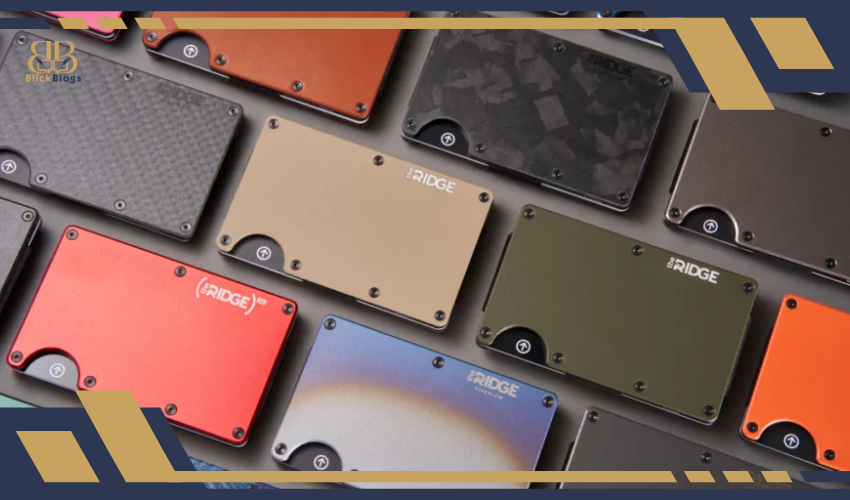
The brand has expanded well beyond its original wallet, but the core Ridge design remains its signature product. Today, you can choose from aluminum, titanium and carbon-fiber wallets, alongside MagSafe models and numerous limited-edition finishes.
Ridge Wallet Key Features
Minimalist 1–12 Card Design
The biggest reason to buy Ridge isn't carbon fiber or RFID protection. It's size. Ridge's design forces you to decide what actually needs to be in your wallet. Most people don't need 17 cards, six receipts, three expired gift cards and a coffee-shop loyalty card they haven't used since 2023. The Ridge accommodates between one and twelve cards.
That provides enough capacity for an ID, debit card, credit cards, work access card and several additional essentials without becoming a traditional bulky wallet. It's particularly effective in a front pocket. And once you've adjusted to carrying less, returning to a thick leather wallet can feel surprisingly cumbersome.
RFID-Blocking Construction
Ridge uses RFID-blocking materials across its core wallets. The company says the aluminum, titanium and carbon materials provide RFID-blocking qualities intended to protect compatible cards from wireless scanning. RFID protection isn't unique to Ridge. Plenty of inexpensive wallets offer it. So we wouldn't buy Ridge solely for this feature. Think of it as a useful layer incorporated into an already premium minimalist design rather than the primary justification for the price.
Cash Strap or Money Clip
Minimalist wallets often struggle with cash. Ridge's answer is simple: put it on the outside. Depending on configuration, you can use a cash strap or money clip. Neither feels as natural as sliding bills into a traditional bifold. But that's the trade-off. If you routinely carry ten or twenty banknotes, Ridge probably isn't the right wallet. If you keep a few emergency bills alongside cards, the system works much better.
Replaceable Components
One of Ridge's better design decisions is that wear components aren't necessarily the end of the wallet. The company offers replaceable parts, and current MagSafe Carbon Fiber specifications explicitly mention replaceable screws and elastic. That's important. The rigid plates may last for years, but elastic naturally experiences wear. Being able to replace components supports Ridge's long-term ownership proposition far better than a wallet designed to be thrown away when one small piece fails.
Ridge Wallet Materials: Which One Should You Buy?
Ridge offers multiple materials that dramatically change the price without changing the underlying concept.
Aluminum Ridge Wallet
For most buyers, this is the Ridge Wallet we'd recommend. Current mainstream aluminum models such as Gunmetal, Royal Black and Alpine Navy are listed around $95 and use 6061-T6 aluminum. You get the recognizable Ridge experience without paying the premium for titanium or carbon fiber. Aluminum is lightweight, durable and available in a huge range of colors. Unless you're specifically attracted to another material, start here.
Verdict: Best Overall Value
Ridge Carbon Fiber Wallet Review
Carbon Fiber 3K is where Ridge starts feeling less like a practical purchase and more like premium EDC gear. The current standard Carbon Fiber 3K Ridge Wallet costs around $150, compared with roughly $95 for common aluminum versions. That's a significant premium. Functionally, you're still carrying up to 12 cards. The biggest differences are material, weight, texture and aesthetic appeal. Carbon Fiber 3K has the woven technical appearance that many EDC enthusiasts specifically want.
It also makes a strong gift because it feels more distinctive than an ordinary wallet. But let's be clear: You don't need carbon fiber to get the Ridge experience. The aluminum wallet provides the same fundamental minimalist system for considerably less money.
Ridge Titanium Wallet
Titanium occupies similar premium territory. Current Grade 2 titanium models are also generally around $150. Titanium has an unmistakably premium EDC appeal. It feels substantial, looks excellent as it ages and fits naturally alongside premium watches, pocket tools and other everyday-carry accessories. But again, the practical difference isn't proportional to the price increase. The aluminum Ridge remains the rational choice. Titanium is the enthusiast's choice.
Check Today's Price
First Impressions
A Ridge Wallet makes a strong first impression because it doesn't really feel like a wallet. It feels like a piece of equipment. The rigid construction, visible screws and precision-machined appearance are deliberately industrial. That's especially true with titanium and carbon fiber. Moving your cards into it takes almost no setup. The adjustment happens afterward. With a bifold, you know exactly where each card is.
With Ridge, your cards sit together. You push the stack outward, spread the cards slightly and select what you need. It becomes intuitive. It isn't immediately intuitive. That's an important distinction.
Real-World Performance
Pocket Comfort
Ridge works best in the front pocket. The small footprint eliminates the bulky folded shape that makes a conventional wallet uncomfortable when sitting. However, rigid materials create their own trade-off. Leather flexes against your body. Metal doesn't. So while Ridge is considerably smaller, it can initially feel more noticeable because the edges and plates remain rigid. After switching pockets or adjusting placement, most users should find a comfortable position.
Card Access
This is probably Ridge's biggest usability weakness. Getting your most frequently used card isn't difficult. But it isn't as fast as a mechanical pop-up wallet. You push cards upward, fan them and select the one you need. With practice, this becomes second nature. But competitors such as Ekster have a clear ergonomic advantage for people who prioritize instant card access. More on that shortly.
Durability
Durability is one of Ridge's strongest arguments. These aren't thin faux-leather wallets relying on glued seams. The metal or carbon-fiber plates are inherently robust, and wear components can be serviced. Ridge has strengthened this proposition further with its current Built for Life Warranty. For eligible Ridge Wallets purchased on or after October 14, 2025 through authorized channels, the program covers defects in materials and workmanship as well as loss, theft, normal wear and accidental damage, although processing fees apply to full replacements. That's broader coverage than a conventional manufacturing-defect warranty. Read the full terms before relying on it, especially because processing fees and eligibility rules apply.
Ridge MagSafe Wallet Review
Ridge's biggest recent evolution is MagSafe. The Ridge Wallet for MagSafe integrates magnetic arrays that allow the wallet to attach to compatible phones and cases. Standard aluminum MagSafe configurations are currently around $150, while Carbon Fiber 3K costs approximately $175. Ridge uses high-strength N52 neodymium magnets, and the wallet remains capable of holding 1–12 cards. An optional strengthening tray expands compatibility. Ridge also makes an important distinction in its own documentation: its wallets are MagSafe compatible, not Apple-certified "Made for MagSafe" accessories. That's worth knowing before purchasing.
Is Ridge MagSafe Worth It?
For the right person, yes. If your phone and wallet are the two things you always carry, combining them can simplify everyday carry even further. It also allows you to detach the wallet when needed rather than permanently committing to a wallet case. The downside is cost. Going from a $95 aluminum Ridge to a $150 MagSafe model is a substantial jump. If your wallet will spend most of its life in a separate pocket anyway, don't pay extra just because MagSafe sounds technologically impressive.
Ridge Carbon Fiber 3K MagSafe Wallet Review
This is essentially the enthusiast version of the enthusiast wallet. It currently costs $175 and combines the 3K carbon-fiber weave with Ridge's magnetic system.
Specifications include:
- 1–12 card capacity
- RFID-blocking plates
- N52 neodymium magnets
- Replaceable screws and elastic
- Optional strengthening tray
- Carbon Fiber 3K weave
- 99-day trial
- Built for Life Warranty
The wallet weighs about 2.7 ounces and measures approximately 86 × 54 × 8 mm. It's an impressive piece of EDC equipment. It's also nearly twice the price of a standard aluminum Ridge.
Pricing & Value Analysis
Here is where Ridge becomes divisive.
| Ridge Model | Approx. Price When Checked |
| Aluminum Ridge Wallet | $95 |
| Carbon Fiber 3K | $150 |
| Grade 2 Titanium | $150 |
| Aluminum MagSafe | $150 |
| Carbon Fiber 3K MagSafe | $175 |
| Some premium/limited designs | Up to $195+ |
Current prices can change with promotions and limited releases. A $95 aluminum wallet is expensive compared with a generic minimalist cardholder. But value needs to be measured over ownership time. If you carry it daily for five years, $95 works out to roughly $19 per year. The warranty and replaceable components also improve the long-term proposition. Carbon fiber and titanium are harder to justify purely financially. You're paying another $55 largely because you want the premium material. And that's perfectly reasonable as long as you recognize what you're buying.
- Best Value: Aluminum
- Best Premium Option: Carbon Fiber 3K
- Best for Apple-Focused EDC: MagSafe
- Best for EDC Enthusiasts: Titanium or Carbon Fiber
Explore BRAND Collections
Ridge Wallet Pros & Cons
| Pros | Cons |
| Excellent minimalist design | Expensive |
| Holds 1–12 cards | Card access takes practice |
| Very compact | Poor fit for lots of cash |
| RFID blocking | No real coin storage |
| Durable materials | Metal feels rigid in-pocket |
| Replaceable wear components | Premium materials add significant cost |
| Aluminum, titanium and carbon fiber | Scratches can occur |
| 99-day trial | Cash system isn't as natural as a bifold |
| Built for Life Warranty on eligible current purchases | MagSafe version is substantially pricier |
| MagSafe models available | Ekster offers faster card access |
Are Ridge Wallets Worth It?
For someone who genuinely wants a minimalist wallet, yes. But there's an important qualifier. Ridge isn't worth $95–$175 simply because it has metal plates and RFID protection. Cheaper wallets can provide both.
What you're paying for is the entire package: the patented form factor, materials, replaceable construction, broad finish selection, mature accessory ecosystem and warranty. That combination is harder to replicate. The aluminum version represents the sweet spot. Carbon fiber and titanium make more sense when you're buying Ridge partly as an EDC object rather than simply somewhere to store credit cards.
Who Should Buy a Ridge Wallet?
Ridge makes the most sense for people who already carry mostly cards. If your daily wallet contains a driver's license, two credit cards, debit card, access card and a couple of emergency bills, Ridge fits that lifestyle extremely well. It's also excellent for people who hate sitting on bulky wallets. EDC enthusiasts will appreciate the premium materials, while iPhone users who deliberately consolidate accessories may prefer the MagSafe version.
| Buyer | Recommendation |
| Front-pocket wallet user | Excellent |
| Carries 4–8 cards | Excellent |
| EDC enthusiast | Excellent |
| Wants RFID blocking | Very good |
| iPhone/MagSafe user | Very good |
| Carries lots of cash | Poor fit |
| Carries coins/receipts | Poor fit |
| Wants instant card access | Consider Ekster |
| Budget shopper | Consider alternatives |
Who Should Avoid Ridge?
Don't buy Ridge if you love traditional wallets. That sounds obvious, but it's worth emphasizing. The Ridge isn't a better leather bifold. It's an entirely different system. If you regularly carry receipts, business cards, coins, photographs and substantial cash, its minimalist design will feel restrictive rather than liberating. You should also look elsewhere if you're primarily interested in value. A $20–$40 minimalist wallet can hold cards perfectly well.Ridge becomes worthwhile when design, construction, long-term ownership and premium materials matter alongside basic function.
Ridge Wallet Reviews: What Do Customers Say?
Ridge itself advertises more than 100,000 five-star reviews across its marketing pages. We would treat that as a manufacturer-reported figure rather than independent verification. Interestingly, the Trustpilot profile for ridge.com isn't particularly useful for assessing broader customer sentiment. At the time checked, it contained only one review, giving it far too small a sample to represent the millions of customers Ridge says it serves. That lone March 2026 review was negative and complained about elastic durability and replacement components. It's worth acknowledging because elastic is a wear component, but one independent review isn't enough to establish a general failure pattern.
More broadly, the strengths and complaints associated with this design are predictable. Positive feedback tends to center on compactness, durability, aesthetics and finally getting rid of wallet clutter. The common drawbacks are equally understandable: card access has a learning curve, cash storage isn't as convenient as a bifold, and the price feels high if you judge the wallet purely by storage capacity. Our assessment lands between those positions. Ridge is very good at what it's designed to do. You just need to want what it's designed to do.
Is Ridge Wallet Legit?
Yes. Ridge is a legitimate, established everyday-carry brand. The official store maintains extensive wallet, MagSafe and accessory collections, publishes detailed warranty terms and supports current products with its 99-day return window and applicable Built for Life Warranty. The better question isn't whether Ridge is legitimate. It's whether its premium is worthwhile for you. And that depends heavily on how much you value minimalist carry.
Ridge Wallet vs Ekster
This is the comparison most shoppers should make. Ekster approaches the minimalist-wallet problem differently. Instead of pushing cards out manually, its metal cardholders use a mechanical button that fans cards upward for quick access. Its standard Cardholder accommodates up to 12 cards and bills, uses 6061-T6 aluminum and includes RFID protection. Current pricing starts around $69 for the standard Cardholder, while the Cardholder Pro starts around $76 and MagSafe Pro models around $129, before promotions or material upgrades.
| Feature | Ridge | Ekster |
| Card capacity | 1–12 | 1–12 standard; more on Pro models |
| Card access | Push/fan manually | Push-button ejector |
| RFID protection | Yes | Yes |
| Aluminum | Yes | Yes |
| Carbon fiber | Yes | Yes |
| Titanium | Yes | Less central to lineup |
| MagSafe | Yes | Yes |
| Tracker ecosystem | Available through accessories | Strong focus |
| Replaceable construction | Excellent | Good |
| Warranty | Built for Life on eligible Ridge products | Varies; lifetime on Pro models |
| Trial | 99 days | 100 days |
| Starting mainstream price | Around $95 | Around $69 |
| Best for | Durability + minimalism | Fast access + smart features |
Ridge Wins on Simplicity
There are fewer moving parts involved in retrieving cards. That suits the industrial EDC philosophy.
Ekster Wins on Card Access
Press a button and your cards fan upward. It's quicker and more satisfying.
Ekster Wins on Tracking
Ekster leans more heavily into smart-wallet functionality, offering Apple and Android-compatible Finder Card options.
Ridge Wins on Material Variety
Titanium, carbon fiber, aluminum and numerous limited editions give Ridge a stronger enthusiast-oriented ecosystem.
Which Is Better?
Choose Ridge if durability, simplicity and premium EDC materials matter most. Choose Ekster if quick card access and tracking features are higher priorities. Neither is universally better.
Ridge Wallet vs Traditional Leather Wallet
This comparison is more fundamental. A leather bifold is more forgiving. It carries cash naturally, accepts receipts, provides individual card slots and develops character as the leather ages. Ridge is dramatically more compact. But minimalism is enforced. That's either its greatest strength or its biggest weakness.
If your current wallet looks like a small paperback novel, Ridge can transform how much you carry. If your current leather wallet already contains five cards and two bills, the difference will be much less dramatic.
Frequently Asked Questions
Is Ridge Wallet legit?
Yes. Ridge is an established EDC company offering wallets, MagSafe products and accessories through its official store, with published return and warranty programs.
Are Ridge Wallets worth it?
Yes for people who prioritize compact front-pocket carry, durable construction and long-term ownership. Budget-focused shoppers can find cheaper minimalist alternatives.
How many cards does a Ridge Wallet hold?
The standard Ridge Wallet is designed to hold 1–12 cards without permanently stretching out.
Does Ridge Wallet block RFID?
Yes. Ridge says its aluminum, titanium and carbon materials provide RFID-blocking properties.
Is the Ridge Carbon Fiber Wallet worth it?
It's worth considering for EDC enthusiasts who value lower weight, distinctive 3K weave and premium materials. For pure functionality, the less expensive aluminum version provides better value.
How much does a Ridge Carbon Fiber Wallet cost?
The standard Carbon Fiber 3K Ridge Wallet was listed at $150 when checked.
Is there a Ridge MagSafe Wallet?
Yes. Ridge now sells MagSafe-compatible wallets with embedded magnetic arrays. Standard versions start around $150, while Carbon Fiber 3K is around $175.
Is Ridge MagSafe Apple certified?
Ridge explicitly states its wallets are MagSafe compatible, rather than Apple-certified "Made for MagSafe" products.
Ridge Wallet vs Ekster: which is better?
Ridge is better suited to shoppers prioritizing simple construction, premium materials and traditional EDC aesthetics. Ekster is stronger for fast push-button card access and optional smart tracking.
Does Ridge have a lifetime warranty?
Eligible current Ridge Wallets are covered by Ridge's Built for Life Warranty. For qualifying purchases made on or after October 14, 2025, the program includes defects, normal wear, accidental damage, loss and theft, subject to its terms and replacement processing fees.
Can you carry cash in a Ridge Wallet?
Yes. Ridge supports cash using either an external cash strap or money clip, depending on configuration.
Does the Ridge Wallet scratch?
It can. Any wallet carried alongside keys, coins or abrasive objects may develop cosmetic wear. Buyers who dislike visible wear should choose their finish carefully and keep the wallet away from sharp objects.
Final Verdict: Is the Ridge Wallet Worth Buying in 2026?
After examining the current lineup, materials, MagSafe options, pricing, warranty and competition, Ridge earns a 9.0/10. There's a reason the design has become synonymous with the modern minimalist wallet. It's compact without becoming impractical. Twelve-card maximum capacity is sufficient for most people's actual essentials, RFID blocking comes standard, and Ridge offers enough materials and finishes to make the wallet feel personal rather than generic. Durability remains a major attraction. And the newer Built for Life Warranty substantially strengthens the ownership proposition for eligible current purchases, although customers should understand its processing fees and other terms.
The $95 aluminum Ridge is our pick for most buyers. It delivers the essential experience without charging $150–$175 for premium materials or MagSafe functionality. The Carbon Fiber 3K model is our enthusiast pick. It isn't dramatically more functional, but the material and appearance make it feel special. The MagSafe Ridge makes sense for iPhone users who deliberately want to combine phone and wallet carry.
The biggest weakness hasn't changed: Ridge demands adaptation. Card access isn't as fast as Ekster's pop-up system. Cash isn't as convenient as a traditional bifold. Receipts and coins barely belong in the conversation. But those limitations are part of the point. Ridge isn't trying to help you carry everything. It's trying to help you carry less.
Shop BRAND Now
At BlickBlogs, we are dedicated to helping you shop more intelligently, spend more judiciously, and find superior value online. Regardless of whether you are a student, a parent, a fashion enthusiast, or just a sensible shopper, we link you to dependable savings opportunities and trustworthy buying options from your preferred brands across the globe
Subscribe
Sign up below to receive money-saving tips, frugal ideas, family-friendly recipes, and more.